
By Laurie Andrews,
President, Cotton & Company
High-rise condominium development is often discussed in terms of location, architecture, and unique selling propositions. Those elements matter — they attract attention and establish desire. But they don’t fully explain what actually moves a high-rise from concept to construction. What ultimately drives progress in high-rise development is momentum. And momentum does not happen naturally.
Momentum is created when buyers, lenders, brokers, and the broader market share a sense of confidence — confidence in the vision, the execution, the timing, and the certainty of delivery. Without that shared confidence, even the most compelling projects can stall.
In high-rise development, confidence must be built deliberately. It is established through strategic positioning, disciplined messaging, and a marketing plan designed to align buyer psychology with the realities of the development cycle. While nearly every high-rise appeals to the broader market on paper, only roughly one-third of buyers are realistically positioned to act during the earliest stages of development. The role of marketing is not simply to highlight features, but to create confidence that activates early demand.
Why Design & Location Are Just the Beginning in High-Rise Development
Developers naturally focus on the attributes that differentiate their project. Views, amenities, architecture, brand affiliation, and location are essential — they establish desirability and define the product. But they do not, on their own, unlock demand across every buyer segment at once.
High-rise condominium demand unfolds over time. Buyers move at different speeds, driven by their own financial readiness, lifestyle transitions, and tolerance for risk. As a result, every lead does not instantly become a contract.
Marketing strategies that rely solely on today’s immediate buyers often overlook this reality. They assume readiness where there is only interest. A project can be compelling to the entire market, yet only a portion of that audience is prepared to act at any given phase of development.
This is why building a quality lead generation effort early is so critical. The goal is not immediate conversion, but the creation of a robust, informed database that can be nurtured over time. As the project advances — from pre-construction to vertical construction to delivery — different segments of that database unlock their purchase potential.
Understanding how confidence develops, and aligning communication to each stage of buyer readiness, is one of the most important success factors in high-rise development. Projects that respect this progression are positioned to sustain momentum, secure financing, and capture demand as it matures.
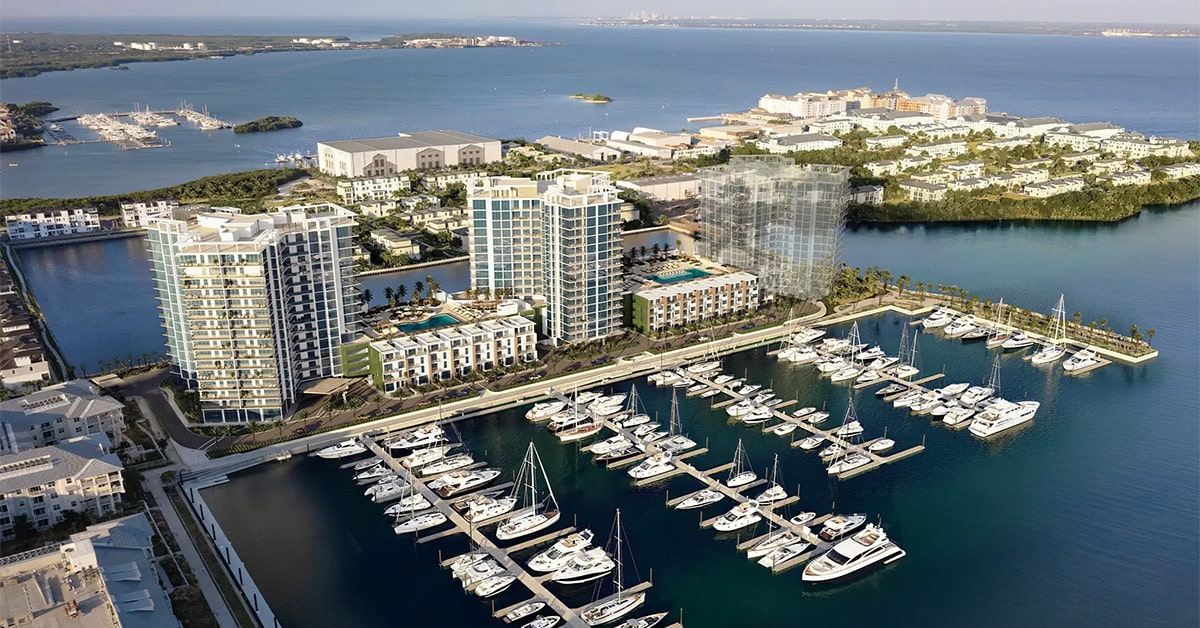
Pre-Construction: Where Confidence Determines Whether a High-Rise Gets Built
The pre-construction phase is the most critical stage of the high-rise lifecycle. This is where projects either establish forward momentum or fail to generate the sales velocity required to move ahead. Developers are understandably cautious about framing early demand around investment or appreciation. Legal and regulatory realities require discipline. But confidence does not need to be built through promises of return.
It can be built through evidence of momentum.
Activity in the surrounding market, investment and growth within an area’s lifestyle ecosystem, visible commitment from other corporate or institutional players, and early buyer engagement all contribute to a broader sense that purchasing early is a smart and informed decision — even before construction begins.
Cotton & Company worked on two high-rise projects in Fort Lauderdale developed by Kolter Urban — Selene Oceanfront Residences and 100 Las Olas. In both cases, early momentum and disciplined positioning helped establish market credibility well before vertical construction was underway. Pre-construction marketing was not about selling units alone; it was about building the confidence required to propel the projects forward.
Many high-rise developments that never reach construction fail not because of product shortcomings, but because they do not generate enough confidence early in the cycle to secure the commitments necessary to move ahead.
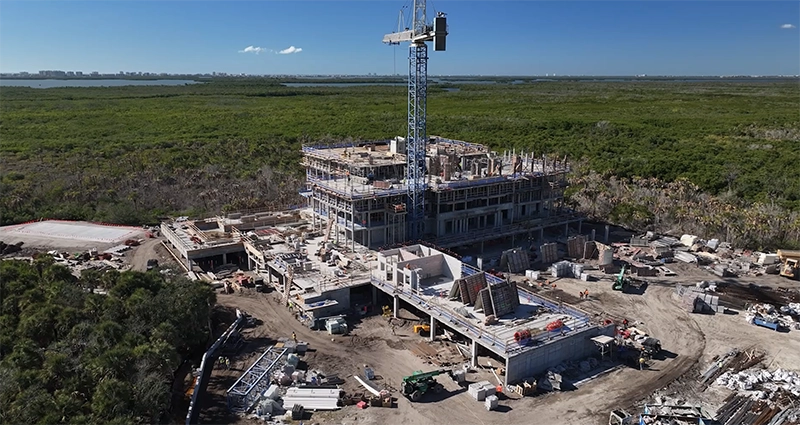
Construction Milestones Become Visible Signals of Momentum
Once construction begins, confidence shifts from belief to confirmation. Groundbreaking, site clearing, and vertical progress become powerful psychological signals for buyers who needed certainty before committing. This phase unlocks the second buyer segment — those who were interested early, but required visible proof that a project was advancing. Delivery timelines feel real, risk feels reduced, and momentum accelerates.
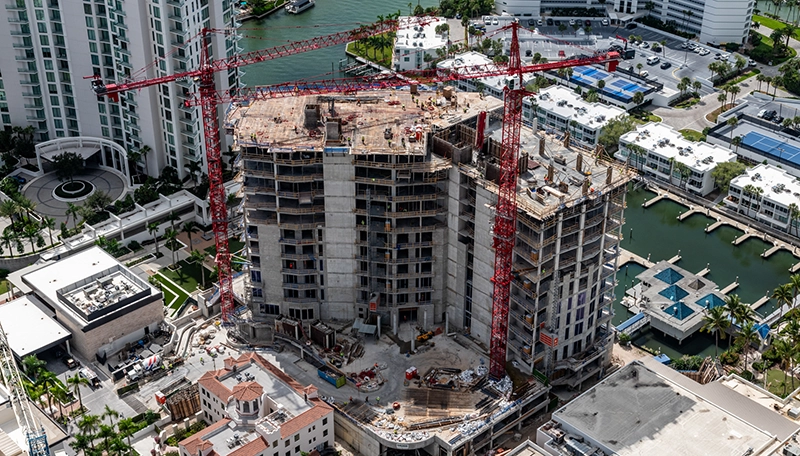
In markets like Sarasota, where high-rise development has expanded rapidly, this stage has been especially influential. Buoyed by early sales momentum established through Cotton & Company’s pre-construction marketing efforts, projects such as The Ritz-Carlton Residences, Sarasota Bay and One Park Sarasota by Property Markets Group were well positioned to capitalize on construction progress as a confidence amplifier — converting long-nurtured interest into active demand.
At this point in the lifecycle, sustained communication becomes essential. Early prospects must continue to be engaged and reassured so that momentum compounds rather than resets as new competitors enter the market and vie for attention.
The Luxury Condo Buyer Who Needs Certainty of Delivery
As a high-rise approaches completion, a distinct buyer profile becomes more active — buyers who prioritize certainty above all else. These purchasers are often transitioning from existing residences and want to see, touch, and experience what they are buying before making a commitment or have the need to sell their existing residence to make the move.
For this group, confidence is tied to visibility and immediacy. Construction is complete or nearing completion, delivery timelines are fixed, and the product can be fully evaluated. These buyers may be willing to compromise on ideal floor plans or views, but they are motivated by clarity and reduced risk. Well-positioned projects often sell through multiple buyer segments across the lifecycle, with delivery-stage purchasers representing the final layer of demand rather than a measure of delayed performance.
Where AI Is Changing the Confidence Curve
While buyer psychology hasn’t changed, the way confidence is formed has. Today’s high-rise buyers are often forming opinions earlier in the process, using AI-driven tools to research markets, compare communities, and validate decisions long before engaging directly with a sales team. AI doesn’t replace human judgment — it accelerates the path to conviction.
Projects that are positioned effectively in this environment don’t get there by accident. Establishing early visibility requires a sophisticated understanding of where AI systems gather information, how signals are interpreted, and which sources carry authority at different stages of a project’s lifecycle. When those elements are aligned intentionally, a credible foundation can be built quickly — even for new developments without a long digital history.
This is where experience matters. Navigating AI-driven discovery is less about tools and more about knowing how to orchestrate clarity, consistency, and credibility across a fragmented information landscape. When done well, AI becomes an accelerant — reinforcing confidence and momentum at exactly the pace a high-rise development requires. This orchestration of visibility, credibility, and timing has become a critical part of how Cotton & Company helps early-stage developments build confidence at the pace the market demands.
Where Boutique and Mid-Rise Developments Operate Differently
Boutique and mid-rise condominium developments follow a fundamentally different momentum model than large-scale high-rises. In these projects, scarcity is not created by timing alone — it is inherent to the property itself. Limited unit counts, irreplaceable locations, and architectural distinction naturally constrain supply, shifting urgency away from development milestones and toward rarity and lifestyle alignment.
Projects such as SeaGlass Jupiter Island, One Thousand Ocean Boca Raton, Ocean Delray, and The St. Regis Longboat Key Residences achieved success through Cotton & Company’s scarcity-based positioning, which drove demand without relying on scale. In these cases, confidence is established through exclusivity, location, and product distinction, reinforced by disciplined sales velocity. For developers, the lesson is not about speed, but about alignment.
Confidence Is Built and It Must Be Managed
At every stage of high-rise condominium development, confidence must be deliberately built and carefully managed. It does not come from a single campaign, a single milestone, or a single moment of market enthusiasm. It is created through strategic sequencing, sustained engagement, and a deep understanding of how buyer psychology, market conditions, and development realities intersect over time.
This is where experience becomes decisive. Building momentum requires knowing which signals matter at each phase, how to activate demand without overexposing risk, and how to carry buyers forward as projects move from concept to construction to completion. It also requires the discipline to adapt strategy as conditions evolve — without losing sight of the end objective.
High-rise development rewards foresight. The projects that succeed are not those that simply generate attention, but those that manage confidence consistently across the entire lifecycle — aligning marketing, sales, and execution to support financing, construction, and long-term value.
In high-rise development, confidence isn’t a byproduct of success. It is a prerequisite for achieving it.