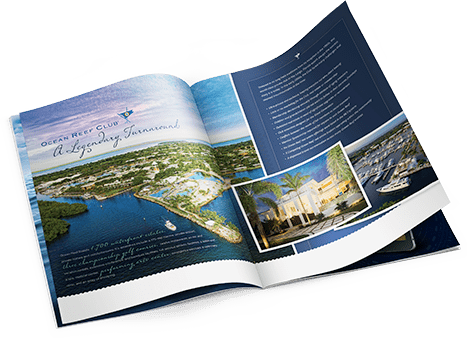

By Laurie Andrews,
President, Cotton & Company
As we close out the year and Florida enters its most important selling season, many luxury developers are taking stock of where they stand. Absorption, traffic, registrations, broker engagement — all the familiar indicators are being reviewed as plans are made for the year ahead. What’s interesting right now is not a lack of demand. Florida continues to attract affluent buyers from the Northeast, California, Texas, and international markets. Lifestyle-driven migration remains strong. Capital is still looking for quality real estate opportunities.
And yet, across the luxury segment, many developers are sensing a disconnect.
-
Interest feels present — but harder to measure.
-
Buyers seem informed — but less visible earlier in the process.
-
Momentum exists — but doesn’t always show up where it used to.
When those signals appear in isolation, they can feel anecdotal. When they appear consistently across markets, price points, and buyer profiles, they start to tell a different story.
When Familiar Metrics Stop Telling the Full Story
For decades, luxury real estate sales followed a relatively predictable discovery path. Buyers searched online, visited websites, registered for information, engaged with brokers or sales teams, and eventually visited a sales gallery or community. That journey hasn’t disappeared — but it has changed.
What we’re seeing now is a growing gap between buyer readiness and traditional visibility metrics. In some cases, buyers are arriving further along in their decision-making process. In others, they’re bypassing early engagement steps altogether. This doesn’t mean they’re less interested. It means they’re arriving differently. The risk for developers isn’t declining demand — it’s misinterpreting what the data is actually saying.
Why Scale Changes What You Can See
Because Cotton & Company works exclusively in luxury real estate and across multiple Florida markets — waterfront condominiums, resort residential, country club communities, master-planned developments — we’re able to view the market horizontally rather than project by project. That perspective matters.
When market data is aggregated across diverse communities and buyer types, certain behavioral shifts become easier to identify. Patterns emerge not from any single campaign or development, but from how buyers are behaving collectively. Over the past year, one influence has become increasingly difficult to ignore.

The Bay 1 Residence at 1000 Boulevard of the Arts, a new waterfront offering in Downtown Sarasota by managing developer Kolter Urban.AI Is Quietly Reshaping Buyer Behavior
Artificial intelligence isn’t something luxury buyers are waiting to adopt — many are already using it. Affluent consumers are among the earliest adopters of new technology. They read The Wall Street Journal, Forbes, Bloomberg. They understand macro trends, market cycles, and increasingly, the role AI plays in filtering information.
Today’s luxury buyer is more likely to:
-
Ask an AI platform for recommendations before visiting multiple websites
-
Compare markets, lifestyles, and communities through conversational queries
-
Arrive at a short list with a higher level of confidence and clarity
-
Spend less time “browsing” and more time validating a decision already forming
In other words, much of the early discovery and education phase is happening before traditional data ever captures it. AI isn’t replacing human decision-making — but it is compressing the path to conviction.
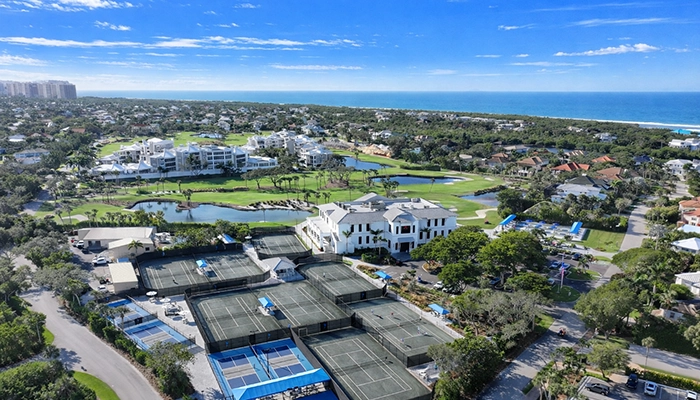
Hideaway Beach Club in Marco Island, Florida, recently completed its new sports and wellness center.
Why the Luxury Segment Feels the Shift First
Luxury buyers tend to move earlier than the broader market — both in lifestyle decisions and in technology adoption. They value efficiency, credible information, and trusted guidance. When a tool helps them make sense of complexity faster, they use it. That’s why this shift is more pronounced in the luxury segment. It’s also why Florida developers are feeling it now.
When AI begins influencing where buyers look, what they trust, and how quickly they narrow their options, the first thing to change isn’t demand — it’s where demand becomes visible.
Reading Between the Lines Going Into the New Year
As developers plan for the year ahead, this is a moment to reconsider which signals matter most.The question isn’t whether AI will impact luxury real estate sales. It already is. The more important questions are:
-
Where are buyers forming opinions before they ever engage directly?
-
Which data points reflect true readiness versus legacy behavior?
-
How do we maintain momentum when visibility no longer follows the same path?
The Most Important Question
Developers Are Beginning to Ask
How do we ensure our project is accurately depicted and discoverable in this new world?
The answer starts with understanding that AI doesn’t “find” projects the way traditional search engines do. It interprets them. AI systems form recommendations based on consistency, credibility, and clarity across a wide ecosystem of information — not just a website or a single campaign. That means discoverability today is influenced by how accurately a project’s story is defined, structured, and reinforced on a consistent basis across every touchpoint where information exists.
For developers, this shifts the focus from generating more visibility to ensuring the right visibility. Projects that are clearly described, contextually positioned, and supported by consistent data are more likely to be surfaced as trusted answers. Those that rely on purely brand messaging or website content structures risk being misunderstood or overlooked by the systems buyers increasingly rely on to narrow their choices.
Ensuring accuracy and discoverability now requires a more intentional approach: aligning brand narrative, market positioning, and data signals so that both human buyers and AI systems interpret the project as it was intended. This isn’t about gaming algorithms. It’s about removing ambiguity — with a diligent and deliberate effort to make sure the story buyers are forming early in their process accurately reflects reality.
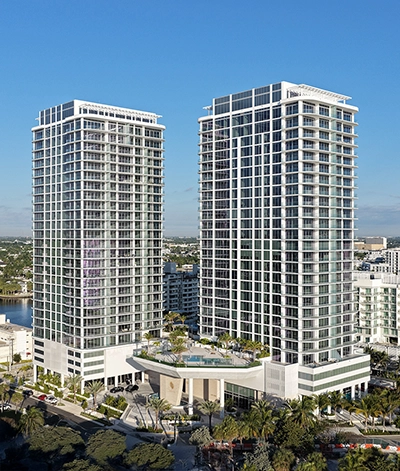
Selene Oceanfront Residences on Fort Lauderdale Beach is now move-in ready with its final inventory.
In the end, deep real estate expertise becomes more valuable when paired with context of today’s evolving technology. Understanding cycles, buyer psychology, and timing has always been critical in luxury real estate. What’s changing is the lens through which early interest is expressed. Those who learn to interpret the new signals early will be better positioned to maintain confidence, pricing power, and sales velocity as the market evolves.
As we enter a new year, the opportunity isn’t just to watch the market — it’s to understand what it’s quietly telling us.
Founded in 1983, Cotton & Company is a full-service marketing and advertising firm focused exclusively on luxury real estate development. The firm works with developers and landowners across multiple markets, specializing in high-rise condominiums, waterfront and marina-front communities, country club and golf communities, master-planned developments, and resort residential projects.
By operating across a diverse portfolio of luxury properties and buyer profiles, Cotton & Company maintains a broad, data-informed view of market behavior, buyer psychology, and emerging trends. The firm integrates strategic planning, branding, creative, digital marketing, and AI-informed insights to help clients maintain momentum and relevance in highly competitive markets.
Cotton & Company is known for blending long-standing industry experience with forward-looking strategy — helping developers interpret market signals, adapt to change, and position their communities effectively as buyer behavior and technology continue to evolve.