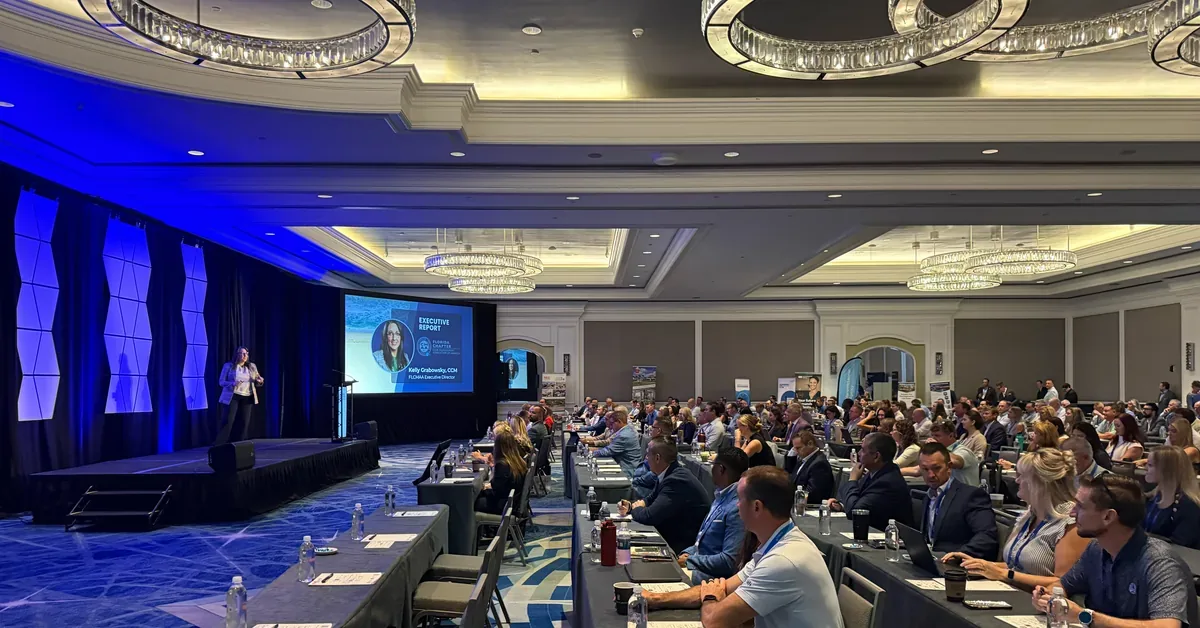
At the FLCMAA Summer Conference Series in Sarasota, the most useful leadership question was not whether private clubs should change. They already are. Member expectations continue to evolve, staff responsibilities are broadening, new technology is entering the workplace, and clubs are constantly balancing service, operations and capital priorities.
The harder question is how to move an organization forward without weakening the experience members joined for in the first place.
That distinction matters because private clubs are lifestyle businesses. Members do not experience a staffing plan, a new system, a communications strategy or a capital decision in isolation. They experience the cumulative result through the way the club feels, functions and serves them.
Members Experience One Club
A leadership team may organize the business by department, but members never see the organizational chart. They see whether service feels consistent, whether communication is clear, whether familiar standards are being preserved and whether the club still feels like the place they chose to join.
That is why a change that looks successful inside one department can still create problems somewhere else. A new system may save time for staff but add friction for members. A staffing decision may improve efficiency but change the level of personal attention. A capital project may strengthen the physical club while creating months of disruption that require thoughtful communication and careful management of the member experience.
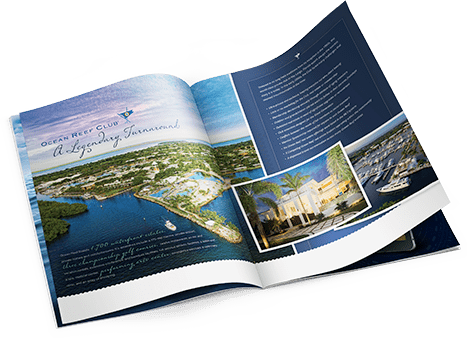
After more than four decades working with private clubs and lifestyle communities, Cotton & Company has seen the same pattern from the market side. The promise communicated to current and future members has to match the experience the organization delivers. Our Private Club Marketing Guide addresses that relationship from a marketing perspective, but the principle is just as relevant to leadership: decisions are strongest when the club is considered as one connected member experience.

Change Requires More Than a Decision
Scott Wozniak, whose experience includes leading change initiatives inside Chick-fil-A, brought the discussion back to a simple implementation problem: people cannot move confidently if they do not know where they are, where they are going and how they are expected to get there.
That sounds basic, but it is where many otherwise sound decisions lose momentum. Leadership may understand the strategy while the people responsible for carrying it out are still trying to determine what is actually different. What needs to start? What should stop? What continues? Who owns the first action? What does success look like in the daily behavior of the people responsible for carrying it forward?
Wozniak also emphasized that good change can produce an initial dip in performance. Familiar routines have been interrupted. People are learning. Responsibilities may be shifting. The first signs of friction do not automatically mean the decision was wrong.
The leadership challenge is to distinguish between the normal discomfort of learning and evidence that a plan truly is not working. It also means recognizing that a club has only so much capacity for change at one time. Several worthwhile initiatives can still compete for the same attention, energy and judgment. Pacing is part of implementation, not an afterthought.

Technology Makes Human Judgment More Important
Sol Rashidi opened her session on artificial intelligence with a line that carried well beyond technology: “Don’t use AI just because you can.”
The point is useful because every new tool arrives with a temptation to confuse capability with necessity. The better leadership question is whether the tool helps the organization deliver its work better and whether the people using it understand where it belongs.
As new tools increase efficiency, employees are increasingly being asked to work across roles and disciplines. Access to information may become easier, but that does not make experience less important. It makes judgment more valuable. Someone still has to understand the context, recognize the exception and know when a process should bend to protect the member experience.
That has implications for developing the next generation of club professionals. Employees need room to make decisions, solve problems, receive feedback and learn why a club operates the way it does. Training people only to follow a new process may produce compliance. Developing people who understand the purpose behind the process produces better judgment.
As Laurie Andrews, President of Cotton & Company, observed following the conference, “Technology and change ultimately come back to people.” That is the point private club leaders cannot afford to lose. The tools, processes and initiatives may change. The member still experiences the club through the people delivering it.
Where Change Is Already Reaching Private Clubs
The leadership question is not only how to manage change once a decision has been made. It is also whether the club is recognizing the areas where change is already underway. For many established clubs, some of the most consequential decisions now sit at the intersection of visibility, technology, real estate and market positioning.
Can prospective members and homebuyers find and understand the club in AI-driven search? Search behavior is changing from lists of links to synthesized answers and recommendations. A strong reputation does not automatically translate into visibility if the public information surrounding the club is thin, inconsistent or difficult for AI systems to interpret. Leadership should understand how the club appears in this new discovery environment and whether its AI visibility and digital authority accurately reflect the experience and value of the club.
Is the website structured for the way people and LLMs research now? A website can be attractive and still make the club difficult to understand. Clear architecture, structured content, useful public information and strong search foundations now affect both human research and AI-driven discovery. Re-evaluating website structure and search performance is becoming less of a design exercise and more of a leadership decision about how the club will be represented before a prospect ever speaks with the membership or real estate team.
Should the club take greater control of real estate inside the community? In residential club communities, the condition, presentation and sale of homes can affect more than individual transactions. Outdated inventory can influence comparable sales, community perception and the pipeline of future members. For some clubs, evaluating an on-site or in-house real estate operation creates an opportunity to align real estate activity with the club lifestyle, community positioning and long-term value rather than leaving those objectives disconnected.
Does the brand still reflect the lifestyle the next generation is choosing? Established clubs often have deep history and strong member loyalty, but the market around them continues to change. Wellness, racquet sports, social connection, dining, technology and flexible ways to use the club can all influence how future members and buyers define value. The objective is not to replace tradition. It is to make sure brand positioning and marketing strategy communicate the full lifestyle the club delivers today and the relevance it intends to maintain tomorrow.
These are not marketing questions in isolation. Each one can affect member experience, community value, future demand and the club’s ability to explain what makes it distinctive. That is why they belong in the leadership conversation about change.
Private clubs will keep evolving. Member expectations will change, new tools will emerge and leadership teams will continue making difficult choices about where to invest time, money and attention. Successful change does not require preserving every old way of working. It requires knowing what should not be lost while the organization moves forward.
For more than four decades, Cotton & Company has helped private clubs and luxury residential communities navigate change through brand strategy, digital marketing, website development, real estate integration and market positioning. Today, that work also includes preparing clubs for AI-driven discovery and helping leadership teams connect new tools and strategies back to the member and buyer experience.
If your club is evaluating AI visibility, website structure, real estate operations or a brand and marketing repositioning, contact Cotton & Company at (772) 287-6612 to discuss where change can create the greatest long-term value.