In new development sales, buyer interest and buyer readiness are not the same thing. A prospect can understand the location, appreciate the design, qualify financially and see a future in the residence, and still decide that the timing is not right. What often changes that decision is not a new amenity or a different sales message. It is a construction milestone that gives the buyer a new kind of proof.
That is why understanding how construction milestones affect buyer confidence is important throughout the development sales cycle. Buyers do not all need the same level of certainty before they are willing to act. Some are comfortable committing before construction begins. Others want visible evidence that the project is advancing. A third group may not become comfortable until completion is close enough that the residence feels tangible and the move can happen on a relatively short timeline.
For developers and their sales and marketing teams, that means a prospect who says “not yet” should not automatically be treated as a lost opportunity.
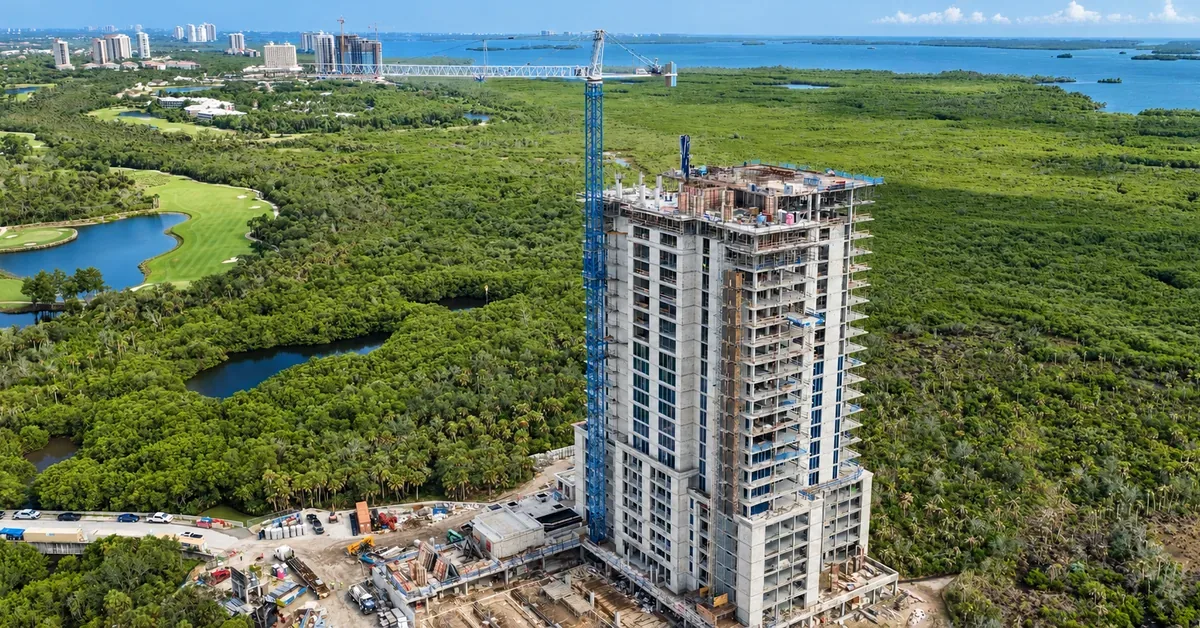
The Island at West Bay Club, designed by Garcia Stromberg, will be delivered mid-2027 in Estero, Florida.
Different Buyers Become Ready at Different Stages
Over years of working in development marketing and sales, Cotton & Company has observed a remarkably consistent pattern: buyers tend to become comfortable at different points in the construction cycle. As a working rule of thumb, Cotton & Company often thinks of the market in thirds—one group willing to commit during pre-construction, another that becomes more comfortable once construction is visibly underway, and a final group that tends to wait until the building is nearing completion.
The percentages vary by project, market and buyer profile, but the pattern has proven useful across development sales: there is rarely a single moment when the entire buyer pool is ready to act.
The first group is willing to commit during pre-construction. These buyers are comfortable making a decision from plans, renderings, the location, the development team’s record and the future opportunity they see in the property. Early selection and early-stage pricing can also factor into the decision.
A second group needs more physical evidence. They may have liked the project from the beginning, but they want to see construction activity and understand that the schedule is becoming more concrete. Progress gives them another level of information they can use to align a future move with the development timeline. At The Island at West Bay Club in Estero, construction is now underway toward a mid-2027 delivery. For buyers who may have been interested earlier but wanted to see more tangible progress, the development’s advancing construction provides another layer of confidence and a clearer timeline around when the residence will become a reality.
The final group places a premium on immediacy. They want to see the building, understand the spaces and know that occupancy is close enough to coordinate the sale of an existing home or another personal transition without a long wait.
None of those approaches is inherently more committed than another. They simply reflect different thresholds for confidence.
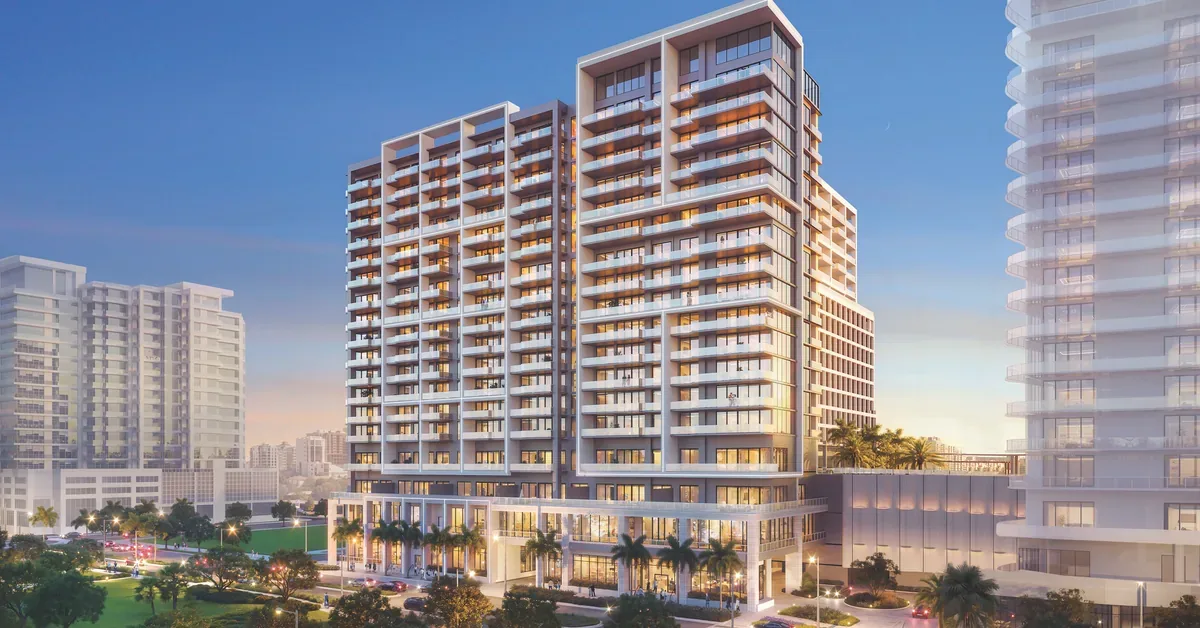
Kolter Urban’s 1000 Boulevard of the Arts in Sarasota is scheduled to break ground in October.
Pre-Construction Buyers Are Comfortable With a Longer View
At the earliest stage, buyers are being asked to make decisions when much of the product still exists on paper.
That creates a particular kind of buyer conversation. The decision depends heavily on confidence in the development team, the strength of the location, the product strategy and what the buyer believes can be gained by entering early. For developers with a successful history in a market, that track record becomes an increasingly valuable part of the pre-construction proposition. Each completed development builds familiarity with the developer’s brand and provides tangible evidence of its ability to execute—giving buyers something more substantial than plans and renderings on which to base an early decision.
That advantage can be particularly meaningful for a developer such as Kolter Urban, whose growing portfolio in Sarasota gives buyers completed and advancing projects against which to evaluate its next development. At 1000 Boulevard of the Arts, buyers entering during the early sales period have had access to broader residence selection and pre-construction pricing—two advantages that can reward buyers who are comfortable making a decision before the building becomes tangible. As construction advances, the project gains another form of evidence: visible execution.
As the property prepares to move from its early-development phase into construction, the story available to buyers changes. Marketing is no longer limited to explaining what is planned. It can begin adding visible evidence that the plan is being executed. That distinction matters to the next group of buyers.
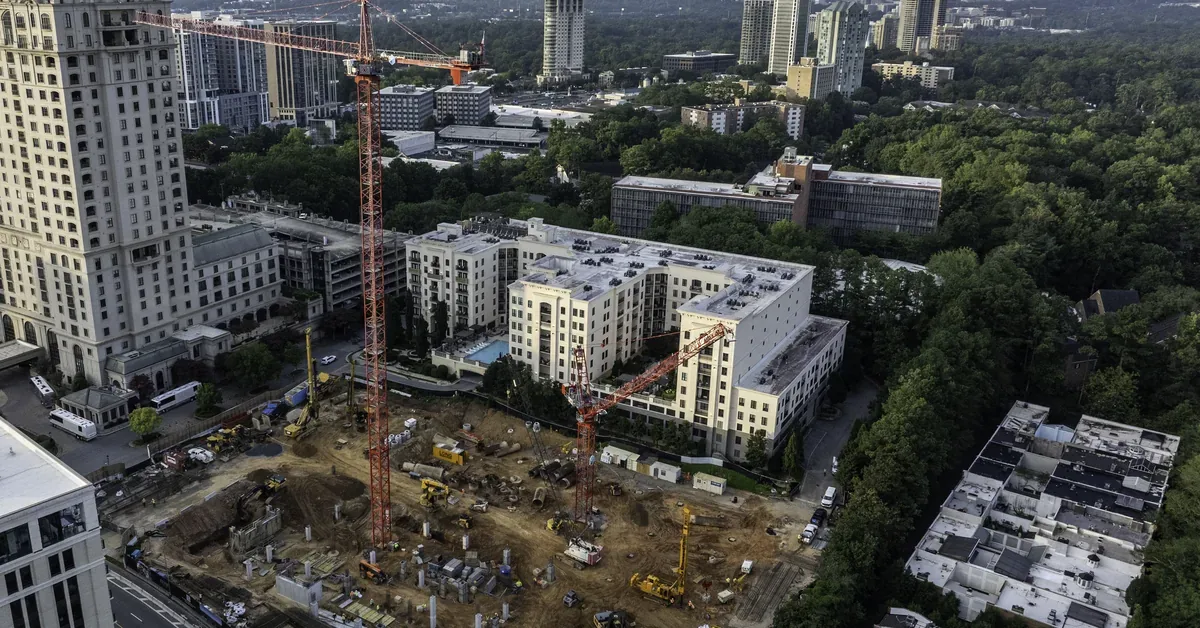
With more than $100 million in early contracts, Elyse Buckhead construction is progressing adjacent to the St. Regis Atlanta.
Visible Construction Gives Some Buyers the Proof They Were Waiting For
For many prospects, drawings and development credentials establish interest, but physical progress establishes confidence. That does not mean construction activity causes a sale by itself. A purchasing decision can depend on financing, lifestyle plans, the sale of another residence, market conditions and many other considerations.
Visible progress can answer an important question: Is this project moving forward on a timeline I can begin planning around?
Within Kolter Urban’s Atlanta portfolio, Elyse Buckhead has now reached this second stage of the buyer cycle. Following its April 2026 groundbreaking, construction is visibly advancing toward a planned fourth-quarter 2028 delivery. For prospects who were interested during the project’s earlier sales period but not yet ready to commit, the conversation has changed. They are no longer evaluating the opportunity solely through plans, renderings and the developer’s track record. They can now see the development being executed.
Elyse has also surpassed $100 million in sales, adding another form of evidence: other buyers have made the decision to move forward. Combined with visible construction activity, that progress gives prospective buyers considerably more information than was available during the earliest sales period. It does not eliminate every concern or shorten the construction timeline, but it can change the confidence equation for someone who was interested months earlier and was waiting for more proof.
That is exactly why lead nurturing should continue after the first inquiry.
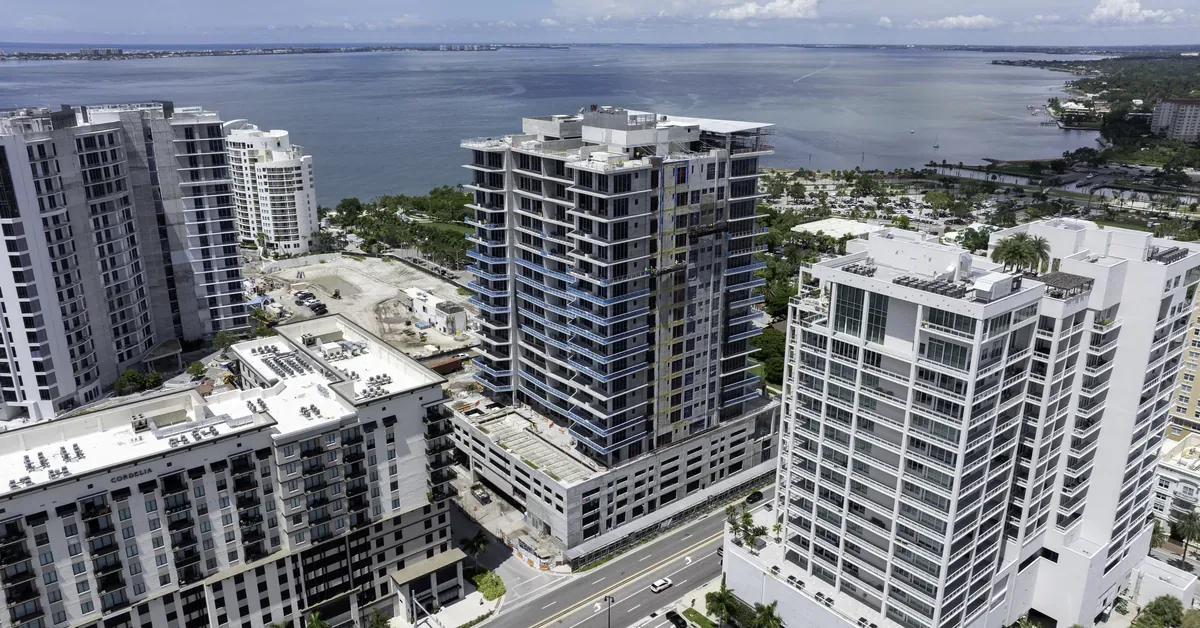
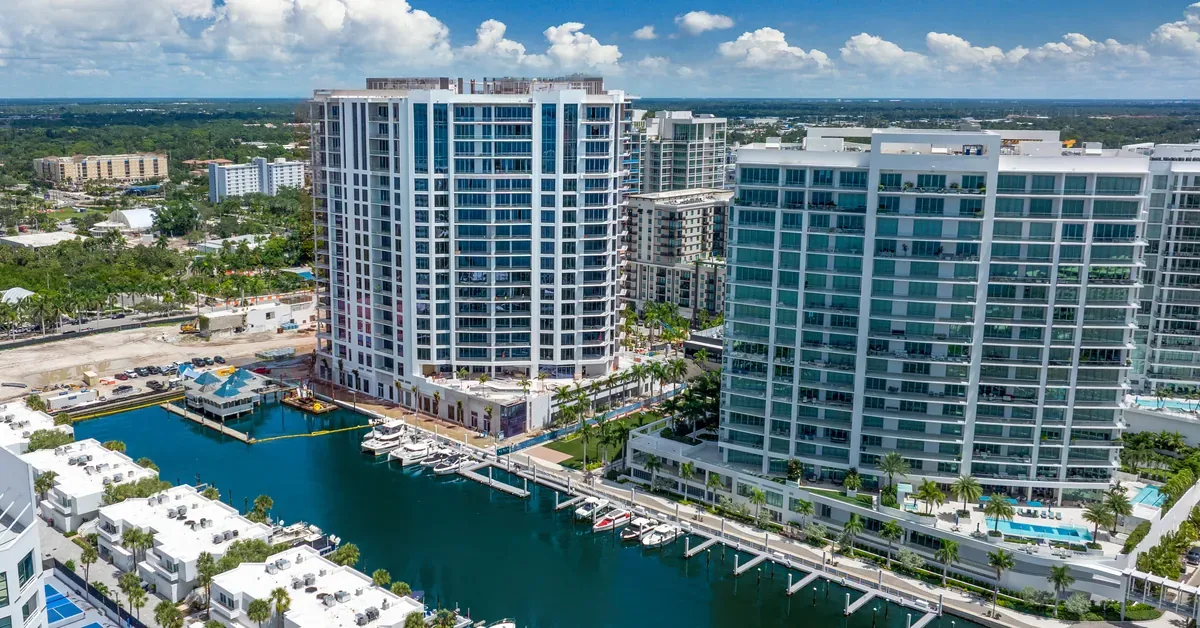
PMG’s One Park Sarasota is currently scheduled for completion at the end of Q1, 2027.
Near Completion Changes the Timing Conversation Again
As delivery approaches, another barrier begins to fall away: the wait.
The Ritz-Carlton Residences, Sarasota Bay brings the Kolter Urban example into the final stage of the buyer cycle. As another development within Kolter Urban’s Sarasota portfolio, it benefits from the developer credibility that supports an early purchase decision. But with delivery expected in the fourth quarter of 2026, buyers now have something they did not have earlier in the sales cycle: immediacy.
Located nearby at The Quay, Property Markets Group’s One Park Sarasota is also approaching completion. The building is fully topped out, with interior buildout and finishing work advancing toward anticipated completion by the end of the first quarter of 2027.
At this stage, the developer’s track record is no longer being asked to carry as much of the confidence equation. The building itself has become the evidence. Construction is nearing completion. The residence is becoming tangible, and the delivery schedule can be incorporated into a buyer’s actual plans. For some prospects, that is the point when interest finally becomes actionable. The long-term promise of pre-construction has given way to something much closer to immediate gratification.
A Lead Can Be Valuable Long Before It Becomes a Contract
Development sales cycles are unusually long, which makes it risky to evaluate leads only by how quickly they convert. Cotton & Company has worked with Kolter Urban across multiple developments and markets, including projects at each of these stages of the development cycle. That continuity reinforces an important principle: the value of a prospect should not be measured only by how quickly that prospect becomes a buyer.
A prospective buyer may enter the database during an early campaign, tour a sales gallery, remain engaged for months and still wait until a specific construction milestone before acting.
The strategic question is not simply, “Why didn’t this person buy?”
A more useful question is, “What proof does this person still need?”
“One of the biggest considerations in development sales is recognizing that buyers become comfortable at different stages of construction. Someone who isn’t ready early may simply be waiting for the project to reach the point that gives them confidence in their own timing,” says Laurie Andrews, President of Cotton & Company.
“At the same time, outside economic and market forces can influence readiness throughout the construction cycle. Understanding how those factors intersect with construction timing is critical. The opportunity is to stay relevant until the project, the market and the buyer’s timeline align.”
That changes the role of lead nurturing. It is not simply about keeping a prospect engaged until they are ready to buy. It is about understanding what has kept them from acting and recognizing when construction progress, market conditions or changes in their own circumstances create a meaningful reason to re-engage.
Groundbreaking can create one conversation. Vertical construction creates another. A major sales milestone adds evidence of buyer commitment. Nearing completion changes the timing and tangibility of the decision.
Each milestone creates a new opportunity to reconnect with buyers whose reasons for waiting may also have changed.
Marketing Should Evolve as the Proof Changes
The marketing strategy that supports a project during pre-construction should remain dynamic. As the development advances, the reasons a buyer has to believe in it become more substantial—and the messaging must reflect that progression.
Early in the sales cycle, communication may rely more heavily on the developer’s reputation, the strength of the location, the product vision, residence selection and the advantages of making an early commitment. At this stage, marketing is helping buyers understand something they cannot yet fully see.
During active construction, the balance begins to shift. Developer credibility remains important, but it is now supported by physical evidence. Groundbreaking, vertical construction, sales milestones and visible progress give the marketing team new proof to communicate and new reasons to reconnect with prospects who may have been waiting.
Near completion, the conversation changes again. Delivery timing, what can now be experienced or observed, remaining residence opportunities and the practical path toward occupancy become increasingly important. The future being marketed during pre-construction is becoming the experience a buyer can actually anticipate in the near term.
The buyer’s threshold may not have changed. The project has finally reached it.
Experience Across the Development Lifecycle
Cotton & Company has specialized in real estate development marketing for more than four decades, working alongside many of the industry’s most experienced developers and sales teams from initial positioning and pre-construction sales through construction, delivery and sellout. That depth of experience provides a perspective that extends beyond individual campaigns and an understanding of the long arc of development—how markets shift, how buyer motivations change and how strategy must respond throughout the sales cycle.
Learn more about Cotton & Company’s real estate development marketing expertise at Cottonco.com.