For years, real estate developers have relied on website registrations, digital engagement and sales-center traffic as early indicators of buyer demand. Those measurements help marketing and sales teams understand current performance, but they also influence expectations about the strength of the market ahead.
For one luxury condominium developer in Florida, more than 1,400 prospects registered through the website over the past year. Registrations were declining. But the prospects who engaged with sales were converting at approximately 15%—roughly twice the anticipated rate. What were the numbers actually telling us?
Was the market signaling a change in buyer acceptance of the product? Or was the marketing program simply not generating the response it should?
That is a legitimate question for everyone involved in the success of a real estate development. When a key performance indicator changes, we need to understand why. But today, new factors are complicating that analysis—including how much buyer activity we can actually see and how far prospects can move through their research before identifying themselves.
A 15% conversion rate is an important indicator of the quality and readiness of the prospects reaching sales. It also makes it difficult to interpret declining registrations as a simple story of weakening demand or insufficient marketing response.
The more interesting question is this: What is higher conversion telling us about the buyers we can no longer see as clearly before they reach sales?
More of the Buyer Journey Is Happening Before Registration
The traditional digital path was relatively easy to recognize. A prospect encountered marketing, visited a property website, explored the offering, registered for information and entered a lead-nurturing process. Marketing could see much of that activity before the prospect ever spoke with sales.
Today, buyers can get considerably further without identifying themselves.
“Across the real estate programs we manage today, we are seeing approximately 40% to 50% of website visitors accept cookie tracking,” said Laurie Andrews, President of Cotton & Company. “That significantly changes how much of the buyer journey is visible through conventional analytics.”
At the same time, more research can happen before a buyer reaches the website at all.
Search and AI-assisted discovery allow prospects to ask specific questions, compare properties and gather information without necessarily clicking through to a development website. A buyer may learn about location, amenities, pricing, residence offerings and competing properties without completing the registration that once made that interest visible to the marketing team.
The buyer has not necessarily stopped researching. The point at which we can see that research may have moved.
That is the invisible buyer.
What Higher Conversion Tells Us
Higher conversion does not prove that declining registrations are positive, nor does it guarantee that a pool of invisible buyers will eventually arrive at the sales center. But it does give us another important piece of information.
Today’s buyer can learn considerably more before speaking directly with a salesperson. A prospect may have studied the location, reviewed residences and amenities, compared alternatives, watched video, read editorial coverage and asked detailed questions through search or AI tools.
In other words, some of the education that once happened after registration can now happen before it.
By the time that prospect calls, makes an appointment or visits the sales center, the questions may be more specific and the alternatives more clearly defined. Sales may be meeting the buyer later in the decision process—and closer to a decision.
That distinction matters when evaluating marketing performance. A registration tells us that a prospect has identified themselves. Conversion tells us something different about the quality and readiness of the people who ultimately engage. We need to understand both.
Marketing and Sales Need to Read the Buyer Together
That was the most valuable part of our client conversation. The sales team was seeing something that registrations alone could not reveal: the prospects entering the sales environment were highly qualified. That intelligence gave marketing a more complete way to evaluate what was happening upstream.
This should not become a debate about whether marketing or sales deserves credit. The better conversation is about what each team is learning from the same buyer.
Marketing needs to understand where prospects are discovering the property and how that behavior is changing. Sales needs to share what it is hearing when those prospects finally engage. Are they better informed? What questions are they asking? What prompted the visit? What alternatives have they already considered?
Bringing those perspectives together helps everyone make better decisions when traditional indicators no longer tell the entire story.
It also changes the strategic response. If fewer buyers are raising their hands digitally, the property must create more physical, social and referral-based opportunities for them to step forward. Watching registrations decline is not enough. We have to broaden awareness, make the property easier to discover and give informed prospects more reasons to engage.
Make It Easier for the Invisible Buyer to Step Forward
For this Florida condominium project, Cotton & Company is initiating a broader awareness strategy designed to reach people beyond those already registering through the website.
Part of that effort is expanding awareness among local residents and visitors. They may be prospective buyers themselves, but they can also become an important referral network. In a competitive real estate market, the person who knows about the property may be the person who introduces us to the eventual buyer.
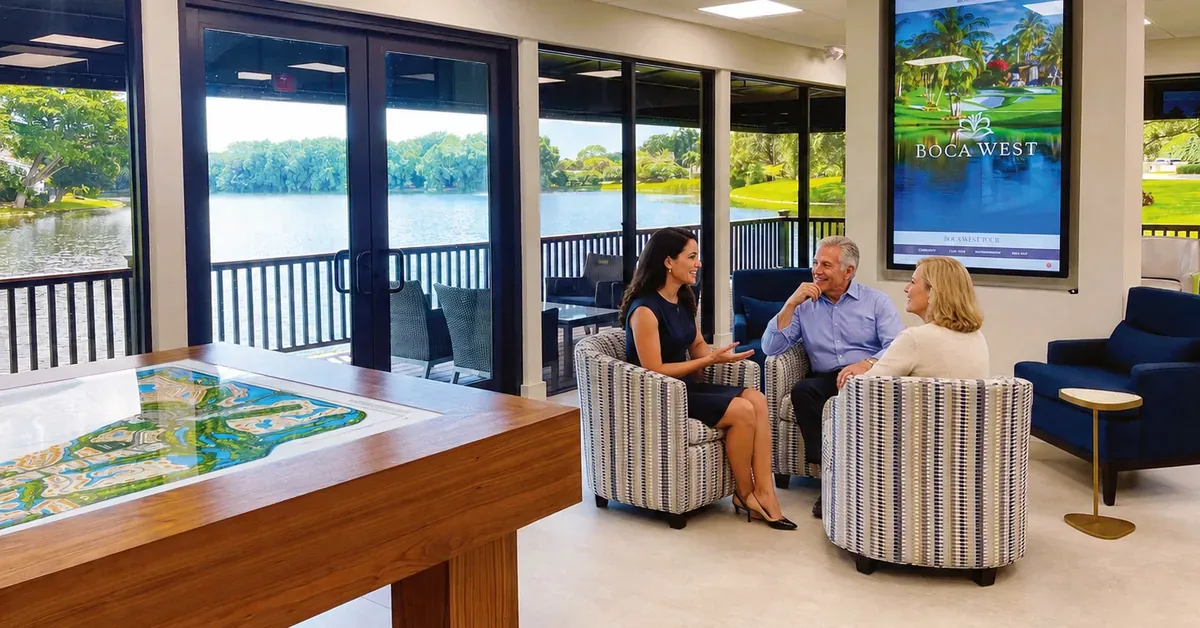
We are also increasing the visibility of the sales office and looking closely at the experience of walking through its doors.
A sales center should be somewhere people feel comfortable stopping for an update, asking a question or simply seeing what is happening at the property. Entering the door should not immediately make every visitor feel as though they have declared themselves a prospective buyer.
This is where hospitality has real value. A friendly hello, a welcoming environment and the freedom to simply be a visitor can make the sales center easier to enter—and easier to return to. Even when a visit does not lead directly to a purchase, a positive experience can create familiarity, future engagement and referrals.
That is a practical response to a buyer who may remain invisible longer: broaden awareness and make the moment of engagement easier.

Look Beyond the Lead Count
Website activity remains important. So does digital engagement, sales-center traffic, conversion and absorption. The change is in how we interpret them together. As online registrations decline, we still need to ask hard questions about market acceptance and marketing performance. But we also need to recognize that the way buyers research real estate—and the point at which they become visible to us—is changing.
Higher conversion gives us a reason to look deeper before drawing conclusions from lower lead volume. For developers reviewing pre-season marketing analytics, that means combining marketing and sales intelligence, understanding where visibility has changed and acting on what the complete picture reveals.
Sometimes the next opportunity is not another registration.
It is giving an informed but still invisible buyer a reason to walk through the door.
To discuss what your marketing and sales signals may be telling you, contact Laurie Andrews, President of Cotton & Company, at 772.600.3501 or visit CottonCo.com.