
By Laurie Andrews
President, Cotton & Company
Developers evaluating a real estate development marketing partner should look beyond creative portfolios and general real estate experience. The stronger test is whether an agency understands how development decisions, positioning, marketing investment, sales activity and buyer behavior work together from early planning through final sellout.
That means looking for development-specific experience, fluency in absorption and sales performance, the ability to work across the development lifecycle, close alignment with sales and CRM intelligence, integrated execution where it improves the assignment, and the judgment to interpret performance rather than simply report activity. Increasingly, developers should also ask how an agency is preparing projects to be understood across traditional search, answer engines and AI-assisted discovery.
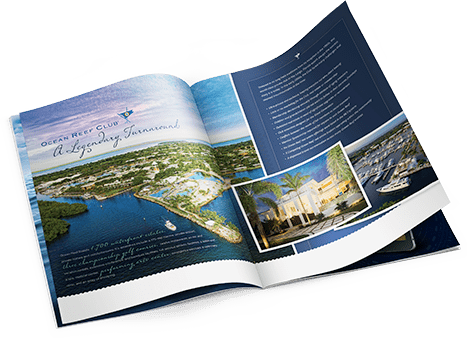
Cotton & Company has worked exclusively in real estate for more than four decades, with experience across more than 1,700 properties. Our portfolio spans master-planned communities, condominiums, private clubs, resort and destination real estate, waterfront communities and international projects.
Those credentials matter, but credentials alone are not the test. Developers should examine what an agency has learned from that experience and how it applies that knowledge to the economics and execution of a development.

One Park Sarasota | Sarasota, Florida
Does the agency specialize in real estate development?
Real estate marketing is a broad category. Marketing an existing brokerage, resale inventory or a corporate real estate brand is not the same assignment as bringing a new development to market.
Development marketing starts before there may be a finished product to photograph or a resident experience to document. The agency may need to help establish positioning, identify likely buyer segments, create a brand, explain a location, support pre-construction sales, coordinate with an outside sales organization and adjust the program as reservations, contracts, pricing, construction and market conditions change. That is why developers should ask a more precise question than, “Does this agency work in real estate?”
Ask whether the agency has marketed new development, in comparable product categories and through different stages of the development cycle.
Cotton & Company was established in 1983 with a focus on real estate sales and marketing and has remained concentrated on the category through multiple market cycles. Its current portfolio includes high-rise condominiums, master-planned communities, private clubs, marina and waterfront developments, corporate real estate assignments and international projects. View Cotton & Company’s real estate portfolio: https://cottonco.com/the-work/
Specialization does not mean a developer should automatically reject every generalist firm. A generalist may bring valuable creative or media expertise to a defined assignment. But when an agency is expected to influence positioning, buyer strategy, launch planning, lead generation and sales performance, direct development experience becomes considerably more important.

The Island at West Bay | Estero, Florida
Does the agency understand development economics?
Marketing decisions in real estate development are ultimately business decisions. A developer is not simply buying impressions, website visits, social engagement or creative assets. The marketing program exists within a development pro forma, a sales schedule and a capital plan. Timing matters. Absorption matters. Lead quality matters. Pricing response matters. Delays can matter.
That does not mean the agency replaces ownership, finance or the sales organization. It means the marketing team should understand the financial realities those teams are managing and be capable of translating the marketing strategy into a realistic expenditure plan that supports the development’s broader business objectives.
At Cotton & Company, our understanding of development economics comes from decades of working directly with development pro formas and sales programs. We have prepared hundreds of marketing cash-flow projections, mapping expenditures against the specific requirements of a development from early positioning and pre-sales through launch, construction, delivery and sellout. Those projections account for when investment will actually be required, how marketing needs change as the project advances and how sales absorption, revenue objectives and market response can affect the plan. The result is not simply an annual marketing budget. It is a working financial roadmap designed to help ownership anticipate expenditures, manage cash flow and adjust marketing investment as the development progresses.
For a developer evaluating firms, useful questions include:
How does the agency think about marketing investment by development phase? What does it monitor when sales velocity changes? How does it distinguish a lead-volume problem from a conversion, positioning or pricing issue? How does it respond when market conditions no longer match the original launch assumptions?
An agency does not need to control every variable to demonstrate development fluency. It should, however, understand the variables well enough to recognize when marketing activity is, and is not, the likely answer.

Orchid Island Golf & Beach Club | Vero Beach, Florida
Can the agency work across the development lifecycle?
The marketing needs of a development can change substantially between concept, launch and sellout. Early work may center on research, market positioning, naming, brand development and buyer definition. A launch adds websites, media, lead generation, sales tools and campaign execution. As buyer data accumulates, the job increasingly involves interpretation: which audiences are responding, what objections are recurring, where qualified prospects are disengaging and whether the original positioning is still doing its job.
An agency that understands only one stage may still be the right specialist for a narrow assignment. Developers looking for a long-term marketing partner should ask how much experience the firm has moving with a project as those requirements change.
Cotton’s marketing capabilities extend across strategy, content, creative, digital marketing, lead generation, market intelligence and analytics. That breadth is most valuable when the disciplines remain connected to the same development and sales strategy rather than operating as unrelated services.
That continuity can begin well before a development enters the market. At Wylder, GreenPointe Developers’ master-planned community in Port St. Lucie, Cotton & Company’s involvement began before construction with naming, positioning and brand development. As the community moved toward market, that foundation carried into website development, social media, digital marketing and lead generation designed to reach multiple buyer segments.
The strategy and execution evolved as the development itself evolved, while remaining connected to the original positioning and sales objectives. The value is not simply in how many services an agency can provide. It is in maintaining strategic continuity as the development moves from one stage—and one business challenge—to the next.
Is an integrated agency always the better choice?
No. An integrated model can reduce handoffs among strategy, creative, digital media, web, content, CRM support and sales enablement. It may also make it easier to connect information across disciplines and respond quickly when one part of the program reveals a problem elsewhere. But integration is valuable only when the disciplines themselves are strong.
For some developments, a best-of-breed structure involving several specialized firms may be appropriate. A developer may already have a trusted public relations firm, sales organization or media partner. A highly specialized assignment may not require a full-service agency at all.
The more useful evaluation is whether the structure creates clarity or friction.
Developers should understand who owns the strategy, how information moves among partners, who interprets performance across channels and how quickly the team can act when conditions change. A multiple-vendor structure with disciplined coordination can outperform an integrated firm with weak strategic leadership. Conversely, integration can be a meaningful advantage when it eliminates disconnected decision-making.
Cotton & Company was deliberately built as an integrated agency, bringing brand strategy, lead generation, creative, digital marketing, web, market intelligence and other disciplines together around a common real estate sales objective. The advantage is not simply having those capabilities under one roof, but allowing information and strategy to move among them without losing sight of the development’s larger objectives.

Boca West Country Club Aquatic Center | Boca Raton, Florida
How closely does the agency work with sales and CRM data?
Marketing should not operate at a distance from the sales team. Advertising platforms can show what prospects click. Websites can show what they view. CRM systems can show inquiries, follow-up activity and movement through the sales process. But the on-site sales team hears something those systems cannot fully capture: the questions buyers repeatedly ask, the objections that slow decisions, the features that generate the strongest response and the reasons qualified prospects ultimately move forward—or do not.
At Cotton & Company, that sales intelligence is an active part of the marketing process. We regularly interview on-site sales teams to understand what they are hearing directly from prospects in the marketplace. Those conversations provide current, ground-level insight that can be compared with CRM data, digital behavior and campaign performance.
That feedback can directly influence the active marketing plan. Messaging may evolve to address recurring objections, clarify areas of confusion, emphasize benefits that are proving particularly meaningful to buyers or respond to changes in competitive and market conditions. Rather than allowing the original campaign assumptions to remain static, the marketing program continues to learn from the sales process.
This creates an important feedback loop: marketing generates interest, sales reveals how buyers are responding, and that intelligence comes back into the marketing strategy.
Cotton’s insights and analytics provide a deeper level of interpretation. In our analysis for Orchid Island Golf & Beach Club, the $4 million-plus, highest-net-worth market segment accounted for only 4% of registrations, yet averaged 21.6 pages per visit. Viewed only through lead volume, that audience could easily appear less important. Its significantly deeper engagement told a different story. The analysis demonstrated why registration volume alone is not enough to evaluate an audience—and why buyer value, digital behavior and sales intelligence need to be considered together.
That is the kind of question developers should ask prospective agencies: What do you learn from the data that changes what you do next?

Wychmere Beach Club | Harwich Port, Massachusetts
Does the agency interpret performance or simply report it?
A monthly report can contain dozens of metrics without producing much intelligence. Impressions, clicks, cost per lead, website traffic and engagement rates all have value. The mistake is treating activity metrics as though they were the business outcome. For development, the more consequential questions usually involve relationships among the metrics:
Are qualified prospects increasing? Is an audience engaging but failing to convert? Are certain messages attracting interest but producing the wrong buyer? Does sales feedback contradict what digital engagement appears to suggest? Has a change in market conditions affected the meaning of previous benchmarks?
Reporting tells a developer what happened. Analysis should help explain why it happened and what, if anything, should change as a result. That requires looking beyond individual metrics and examining the relationships among audience engagement, lead quality, campaign performance, search behavior, CRM activity, sales feedback and changing market conditions. A decline in lead volume does not automatically mean more media is required. Strong website engagement does not necessarily indicate qualified demand. A conversion problem may actually be a pricing, positioning, product or sales-process issue. The value of experienced analysis is recognizing those distinctions and determining where a marketing response can make a meaningful difference.
No agency can promise that better interpretation eliminates market risk. Development remains affected by product, pricing, capital conditions, competition, construction, location and many other variables beyond marketing. What the right partner can do is help ownership identify signals sooner and make marketing recommendations with better context.

Bay Harbor Yacht Club | Bay Harbor, Michigan
Does the agency have the experience and confidence to tell ownership when marketing is not the problem?
Yes. An experienced development marketing agency should be willing to recognize when marketing is not the primary problem. Slower sales may be related to pricing, product, positioning, competitive conditions, financing, the sales process or broader market conditions rather than insufficient advertising or lead generation. The agency’s responsibility is not to prescribe more marketing every time performance changes, but to use sales feedback, CRM intelligence, market conditions and performance data to help identify what may actually be affecting results. That judgment is particularly important in development, where solving the wrong problem can consume both time and capital.

The Ritz-Carlton Residences, Sarasota Bay | Sarasota, Florida
Does the agency understand AI-driven discovery?
This question has become more important because search behavior is changing rapidly. Potential buyers can now research markets, compare communities and explore lifestyle questions through AI-assisted tools before they ever visit a development website or submit an inquiry. Developers themselves are also using new research tools when evaluating markets, vendors and strategies.
That expands what “visibility” means. AI has become the new gatekeeper. Traditional SEO remains relevant, but a development increasingly needs a digital presence that clearly explains who it is for, where it is, what distinguishes it and how credible information about it connects across the web.
At Cotton & Company, AI visibility has expanded the way we think about digital discovery. The objective is no longer limited to helping a development rank for relevant search terms, but to build the depth, clarity and supporting evidence that help traditional search, answer engines and AI systems understand what a development is, where it is, who it serves and what makes it relevant. That requires stronger website content, editorial authority, market and location context, structured information, internal linking and a broader digital content ecosystem. AI can expand our ability to analyze visibility and understand how a project is being discovered, but it does not replace the real estate experience and human judgment required to determine what the strategy should be.
Developers should be cautious of firms promising guaranteed AI rankings, recommendations or citations. These systems change rapidly, and no responsible agency controls how an outside platform chooses or summarizes information. A more useful question is whether the agency understands how to make a development clear, credible and well supported wherever digital discovery occurs.

SeaGlass Jupiter Island | Jupiter Island, Florida
How should developers evaluate an agency’s track record?
Start with relevance, not just volume. A large portfolio is more persuasive when it includes assignments comparable to the developer’s actual challenge: similar product categories, buyer profiles, development stages, geographic conditions or sales complexities. Then go beyond the portfolio.
Ask how long clients have stayed with the firm. Look for repeat assignments. Review current work as well as legacy projects. Ask what the agency actually did on the project rather than assuming every portfolio logo represents the same scope. Most importantly, ask to speak with clients.
Cotton & Company’s experience spans more than 1,700 properties across numerous development categories, but some of the strongest evidence of our track record is found in the relationships we have built with developers over decades. Organizations including Kolter, GreenPointe Developers, Fontainebleau Development and The Lutgert Companies have worked with us across multiple projects, market cycles and changing development challenges. We take considerable pride in those longstanding relationships because repeat assignments represent something a portfolio alone cannot: the continued confidence of experienced developers who know our work, understand how we operate and continue to bring us back to the table.

Wildcat Ranch | Crandall, Texas
What should developers ask before selecting a marketing partner?
The strongest agency-selection process should reveal how a firm thinks, not simply what it sells. Developers should be able to answer:
Does this firm understand new real estate development specifically? Has it worked through different market cycles and development stages? Does it understand absorption, timing, revenue objectives and the financial implications of marketing decisions? Can it remain useful from positioning through sellout? Does its operating structure improve coordination for this particular assignment? How does it connect marketing intelligence with sales and CRM feedback? Can it explain what performance data means and recommend a response? Does it understand how search and AI-assisted discovery are changing visibility? Can it substantiate its claims with relevant projects, longstanding relationships and references?
Not every development needs the same agency model. A defined assignment may call for a specialist. An established development team may already have several strong partners in place. Other projects benefit from a more integrated relationship.
What should remain consistent is the standard: the marketing partner should understand the development business well enough to connect strategy, execution and sales consequences.
For developers planning a new project or reconsidering the positioning and marketing of an existing one, timing matters. The earlier an experienced development marketing team is involved, the greater the opportunity to align positioning, sales strategy, marketing investment and buyer discovery while important decisions remain open—and before those decisions become expensive to change. To learn more about Cotton & Company, visit Cottonco.com.
About Laurie Andrews
Laurie Andrews is President of Cotton & Company. She joined the firm in 1988 and has specialized in residential real estate marketing and sales for master-planned communities, destination resorts, urban condominiums and mixed-use developments throughout the United States, Latin America and the Caribbean. She oversees a multidisciplinary team working across branding, media, website development, SEO, SEM, CRM, social media, AI visibility and related real estate marketing services.