What Cotton & Company’s work in AI citation reporting and new insights from MAICON 2026 reveal about the changing relationship between visibility, authority and marketing performance.
For decades, marketers have relied on a familiar collection of measurements to understand online performance. Search rankings, website traffic, referral sources, engagement and conversions have provided the foundation for evaluating digital marketing strategies. While these metrics remain important, they are becoming less capable of explaining how consumers discover companies, compare alternatives and determine which brands deserve their consideration.
The challenge is developing on two fronts. Privacy requirements and cookie consent have made portions of traditional digital behavior less observable, creating gaps in analytics reporting that platforms such as Google Analytics attempt to address through modeled data. At the same time, artificial intelligence is introducing an entirely different discovery process, one in which consumers can research options, evaluate recommendations and develop preferences without ever visiting a company’s website.
For marketing professionals, the implications are significant. A growing portion of the discovery process is occurring outside the reporting systems that have guided digital strategy for years. Yet there is no universally accepted standard for measuring how brands are being represented, cited and recommended within AI-generated responses.
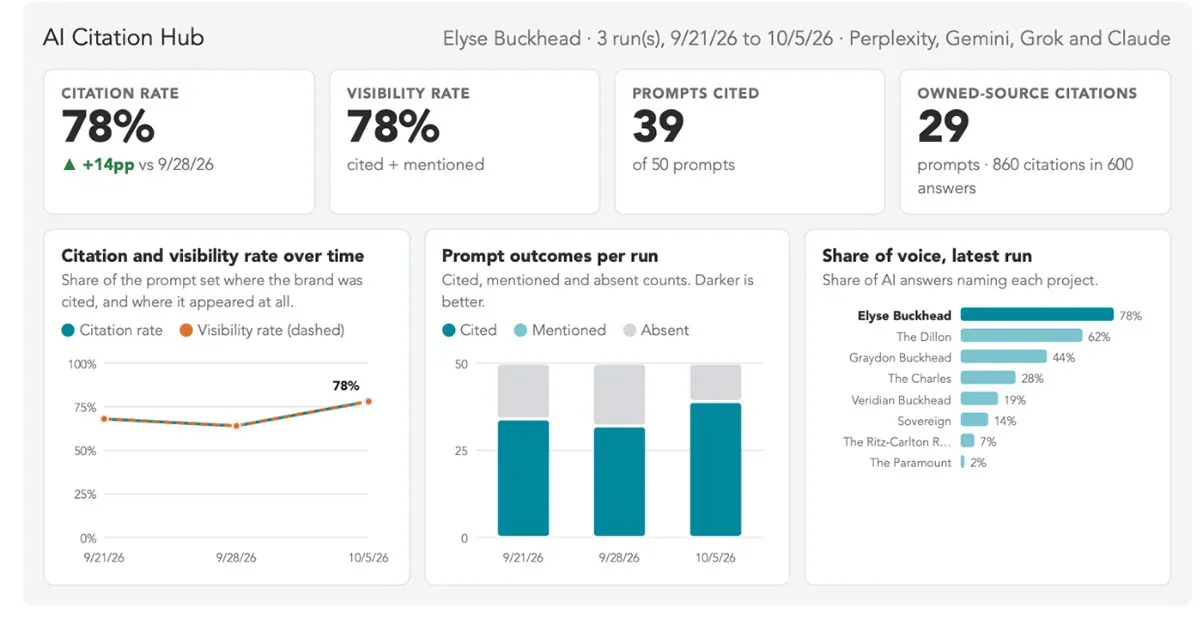
At Cotton & Company, this emerging measurement gap has become a central focus of our strategic planning. We have begun incorporating AI citation reporting into our approach to understanding brand visibility, not simply to determine whether a client appears in AI responses, but to examine the information sources, competitive relationships and signals of authority influencing those results.
“For years, our industry has relied on rankings, website traffic and conversions to evaluate digital performance. Those measures remain important, but we’re now operating in an environment where a buyer can research a company, compare alternatives and develop a preference without ever visiting its website,” says Laurie Andrews, President of Cotton & Company. “That fundamentally changes what we need to understand about visibility. We must look beyond the traffic we’re receiving and examine the information influencing those decisions.”
It was against this backdrop that I attended MAICON 2026 in Cleveland, where a presentation by Wil Reynolds, founder and co-CEO of Seer Interactive, reinforced many of the conclusions we had already reached through our own work.
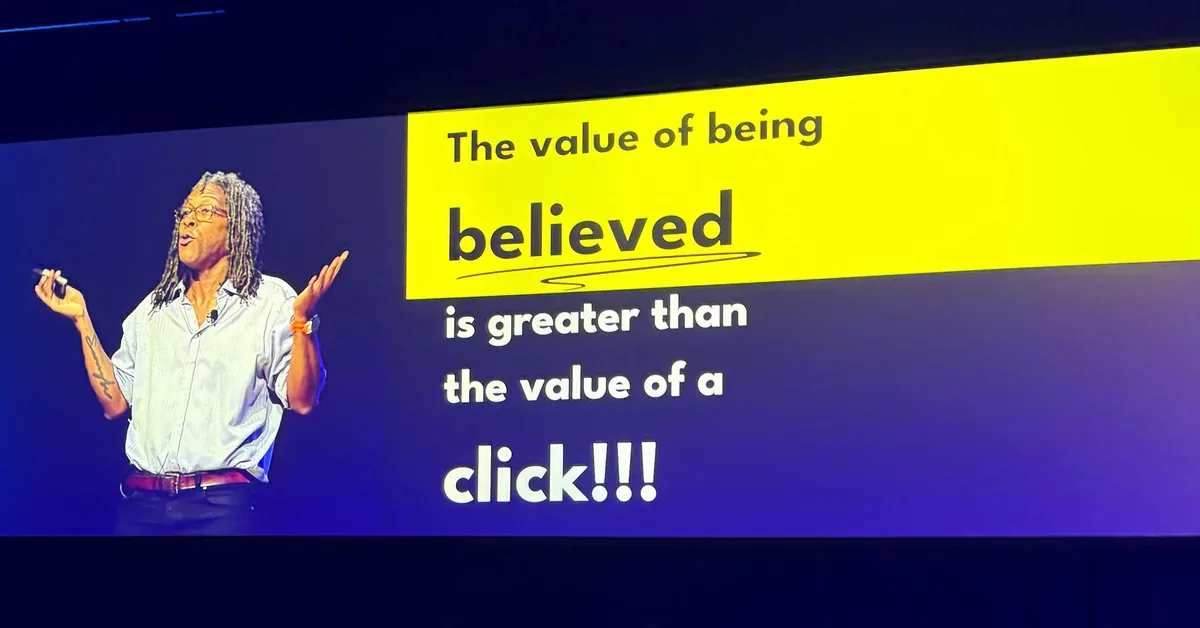
Rather than introducing an entirely new direction, Reynolds’ perspective helped validate why the industry needs to move beyond measuring appearances and begin evaluating the credibility, context and potential business value behind them.
Being Seen Is Not the Same as Being Chosen
Reynolds challenged one of the assumptions driving much of today’s investment in AI optimization: that increasing a brand’s visibility in AI-generated answers necessarily improves its chances of attracting customers.
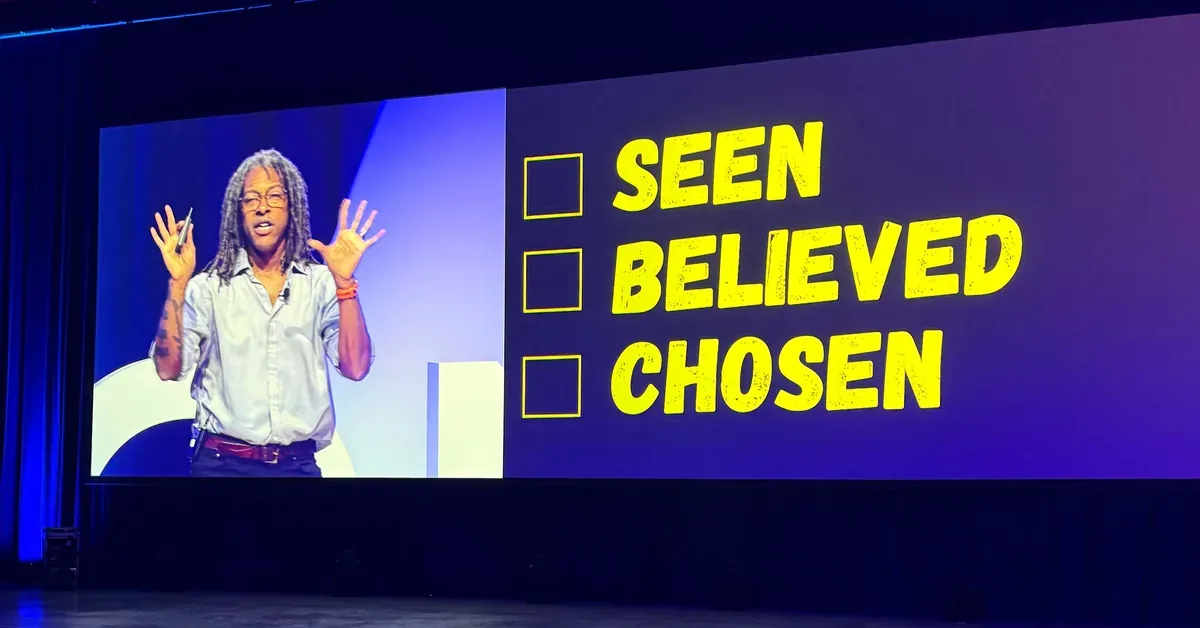
“Nobody actually gets paid on being visible in AI,” Reynolds told the audience. His presentation centered on a straightforward progression that marketers have understood for generations, even if emerging AI measurement practices sometimes overlook it. A consumer must first see a brand, then believe it can solve a problem, and ultimately choose it over competing alternatives.
Reynolds described these three stages as being seen, believed and chosen. His concern is that marketers have become so preoccupied with the first stage that they are overlooking the two that ultimately influence business results.
To illustrate the problem, he described evaluating the AI presence of a vacation rental company that considered itself well positioned for AI discovery. The company appeared in the response, but the surrounding information discouraged the consumer from choosing it. A conventional visibility report might have counted that appearance as a success, even though the recommendation itself worked against the brand.
“Visibility is not recommend-ability,” Reynolds emphasized. It is a distinction that deserves considerably more attention, especially as companies begin allocating resources to generative engine optimization and other AI visibility initiatives.
A brand can appear frequently in AI responses without being presented as a preferred choice. It may be mentioned in a comparison that favors competitors, referenced through an unflattering third-party source or included in an answer without any meaningful indication of authority. Counting those appearances without examining their context risks creating a misleading picture of progress.
“That’s important to recognize when marketers are being presented with dashboards full of new AI visibility metrics,” Andrews explains. “We’re not interested in producing another report that tells our clients they’re showing up. We want to understand why they’re appearing, what sources are influencing those results, and whether the evidence supports the market position we’re trying to build.”
The distinction between visibility and recommendation is not entirely new to marketing. Brands have always needed more than awareness to earn preference. What has changed is the influence of AI systems in organizing information and presenting alternatives to consumers, often before those consumers make direct contact with the companies being evaluated. This is precisely why measurement needs to evolve.
What Citation Reporting Is Teaching Us
The first question many companies ask about AI visibility is whether their brand appears when consumers search for relevant products, services or expertise. It is a reasonable starting point, but our work at Cotton & Company suggests that the more valuable insights come from examining what surrounds those appearances.
Our approach to AI citation reporting considers the questions consumers are asking, the topics with which brands are associated, the sources AI systems reference and the competitive alternatives presented within those responses. We also examine where a brand’s own digital content contributes to the information environment and where independent third-party sources appear to carry greater influence.
Together, these findings begin to establish something marketing professionals urgently need: a tangible benchmark against which changes in AI visibility and authority can be evaluated over time.
The objective is not to suggest that any single report can fully explain how AI systems reach their conclusions. Generative responses vary across platforms, prompts and repeated interactions, and the underlying process is not completely transparent. Citation reporting is an observable sample of that environment, not a complete account of everything influencing a model’s response.
Its value lies in providing structured evidence that can be monitored, compared and incorporated into strategic decisions. “If a report does not change what we do next, it is reporting, not strategy,” Andrews says. “The value is not in producing another score. The value is in understanding what the evidence is telling us to change.”
For example, citation reporting may reveal that a company enjoys strong recognition for one aspect of its business but receives relatively little attention for another attribute central to its market positioning. It may identify competitors being cited more frequently for particular questions or uncover independent publications and industry resources that are repeatedly influencing responses.
Those observations have implications far beyond website optimization. They may suggest a need for more original research, greater executive participation in industry discussions, a different approach to public relations or a stronger connection between the company’s brand positioning and the information available to substantiate it. They may also expose a more fundamental disconnect between the questions a marketing team is targeting, and the language prospective customers use.
One of Reynolds’ examples at MAICON was particularly relevant to this point. He described how Seer Interactive analyzed transcripts from its sales conversations to identify concerns and terminology emerging among clients. The team discovered growing frustration around AI measurement, which informed an article that subsequently attracted exceptional attention.
The lesson was not simply that a better topic generated more traffic. It was that listening to customers produced a more relevant understanding of what the market needed to know. Reynolds urged marketers to examine whether their AI prompt tracking reflects the questions prospects are asking, rather than relying exclusively on terminology developed by SEO teams.
For Cotton & Company, this reinforces the importance of connecting AI measurement with buyer intelligence and broader strategic planning. Particularly in specialized markets such as luxury residential real estate, the questions that influence a purchase decision can be considerably more nuanced than traditional keyword research suggests.
Understanding those questions, and the evidence AI systems use when responding to them, creates an opportunity to make marketing strategy more relevant and accountable.
Authority Requires Evidence, Not More Content
Another recurring theme in Reynolds’ presentation was his insistence that brands need what he called “receipts,” credible evidence supporting the claims they make about themselves.
His argument challenges the temptation to treat AI optimization primarily as a content production exercise. Publishing additional pages, repeating keywords or generating large volumes of articles may increase a brand’s presence in certain searches, but those tactics do not necessarily establish the trust required to earn meaningful recommendations.
Reynolds explained how Seer Interactive began receiving greater attention from respected industry publications after investing in original research and studies that offered something genuinely useful to the marketing community.
“We did the things that the journalists in our industry loved,” he explained. That attention demonstrated recognition from independent sources already respected within the industry. The resulting mentions, links and referral traffic were not merely additional performance statistics; they offered tangible evidence that the company’s ideas were influencing people whose opinions carried weight.
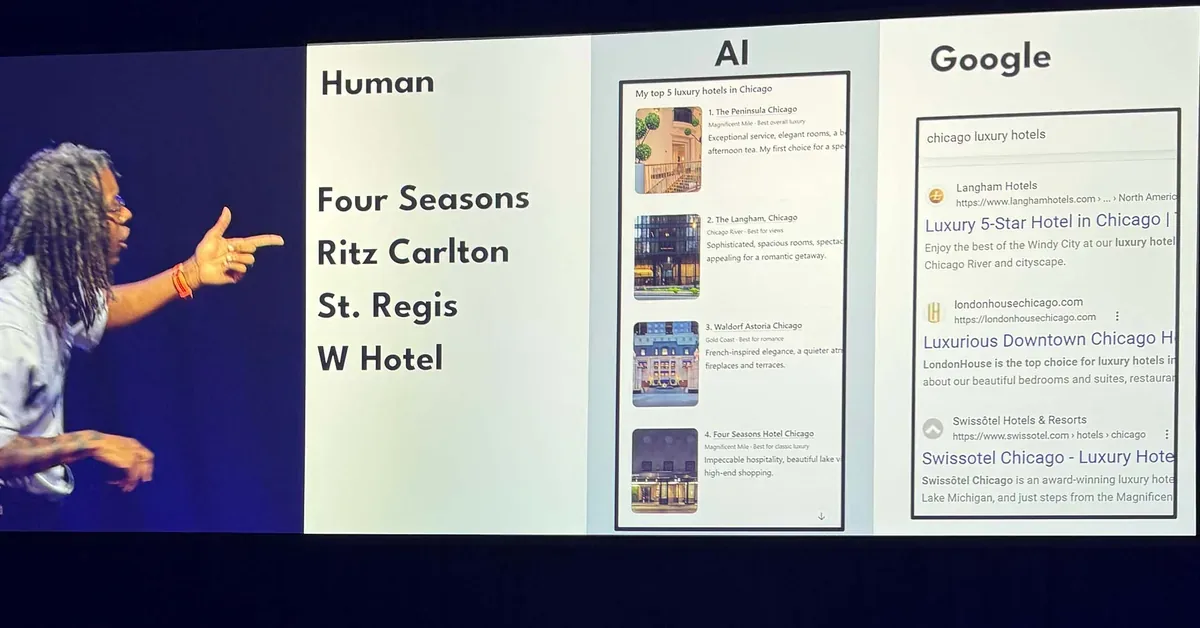
Reynolds captured the broader principle in another observation: “AI search and Google search are nothing more than proxies for human trust.” His message was that the pursuit of AI visibility should not distract marketers from the work that creates credibility among actual customers, journalists, industry professionals and other influential audiences.
It is an important reminder at a moment when the ease of producing digital content has increased dramatically. The competitive advantage is unlikely to come from publishing the largest volume of material. It will come from developing original thinking, meaningful expertise and credible evidence that others consider worth referencing.
For Cotton & Company, the implications extend across the entire marketing organization. Brand strategy, public relations, content development, digital marketing and sales intelligence can no longer operate as largely independent disciplines when each contributes to the evidence surrounding a company.
Consider a luxury residential development seeking recognition for an exceptional architectural design, a distinctive amenity offering or the reputation of its development team. A website can communicate those attributes, but the broader authority surrounding the project may also depend on architectural coverage, developer credentials, published interviews, independent market commentary and the consistency of information available across trusted sources.
Citation reporting can help identify where that supporting evidence exists and where it may need to be strengthened. “The measurement is beginning to tell us where the next work needs to happen,” Andrews explains. “We’re not simply looking backward at performance. We’re using what we can observe to understand where a brand has earned credibility, where the evidence is insufficient and where our efforts should be concentrated.”
This does not diminish the importance of traditional SEO. Technical website performance, indexability, relevant content and search visibility remain foundational elements of digital marketing. What AI discovery changes is the breadth of information that marketers need to consider when evaluating a brand’s competitive position.
A well-optimized website is still important, but it is no longer sufficient to understand the full environment in which a brand may be researched, compared and recommended.
The Transparency Gap Is Becoming a Strategic Challenge
The industry’s growing interest in AI measurement comes at a particularly complicated moment for digital analytics.
Cookie consent requirements, privacy restrictions and changes in tracking technologies have already made it more difficult to observe the complete customer journey. Google Analytics can use behavioral modeling under eligible conditions to estimate some activity that cannot be directly recorded, but marketers must still distinguish between observed behavior, modeled estimates and information that remains unavailable.
AI discovery adds another dimension to that uncertainty. Traditional analytics may identify visits arriving from certain AI platforms when referral information is available, but those visits reveal only a portion of the activity taking place. They do not tell marketers how frequently a brand was considered without generating a website visit, what alternatives were presented during the research process or how third-party information influenced the answers.
Nor can conventional website analytics explain why one company is consistently associated with a particular subject while another struggles to gain recognition. This creates a meaningful blind spot for organizations that continue to evaluate digital performance almost entirely through website-centric reporting.
“The uncomfortable reality is that some of the most consequential discovery activity is occurring outside the reporting systems marketers have depended on for years,” Andrews says. “We cannot solve that by pretending the old dashboard still tells us everything we need to know.”
The response should not be to abandon established measurement practices or assume that emerging AI monitoring tools provide perfect answers. It should be to develop a more comprehensive approach to evidence, incorporating what can be reliably observed while acknowledging the limitations of each measurement source.
That approach also requires a change in how strategic plans are developed and managed. Historically, agencies might establish annual marketing priorities, execute campaigns and evaluate results against a relatively stable collection of performance indicators. AI discovery introduces another source of competitive intelligence that can influence those priorities as new patterns emerge.
If citation reporting begins to reveal that a competitor is gaining authority around an important topic, that finding may warrant closer investigation. If trusted publications are repeatedly cited in connection with a category, the information may influence media relations priorities. If a client’s strongest differentiators are poorly represented in responses to relevant buyer questions, the strategic plan may need to address the supporting evidence rather than simply produce more promotional content.
Not every fluctuation in an AI response warrants action. Meaningful evaluation requires consistent methodologies, sufficient observations and the ability to distinguish persistent patterns from normal variation. When reliable patterns do emerge, they provide intelligence that should inform decisions across the marketing program.
For an industry facing declining certainty in some traditional analytics and increasing complexity in AI discovery, the ability to create useful benchmarks and respond to changing evidence may become a significant competitive advantage.
From Reporting to Strategic Advantage
One of the most valuable aspects of attending MAICON 2026 was hearing experienced marketing professionals challenge the industry’s tendency to chase the newest technology without sufficiently questioning what success should look like.
Reynolds was particularly direct in reminding the audience that the ultimate objective is not to satisfy an algorithm. It is to influence real people making real decisions. His presentation reinforced something we have long believed at Cotton & Company: strong marketing requires an understanding of human behavior, credible differentiation and the ability to connect multiple disciplines around a coherent strategy. Artificial intelligence has not eliminated those fundamentals. It has made their relationship to digital visibility considerably more important.
What is changing is our ability, and increasingly our responsibility, to investigate how those factors influence the information AI systems use when representing a brand. The work ahead requires more than learning another reporting platform or adding an AI optimization service to an existing digital program. It involves establishing meaningful benchmarks, examining the credibility of information sources, identifying gaps between brand positioning and observable authority, and allowing those findings to influence strategic priorities.
For companies investing significant resources in marketing, the urgency is not simply that AI adoption is accelerating. It is that the information shaping future recommendations is being developed, distributed and reinforced now. Waiting for a perfect measurement standard before responding risks allowing competitors to establish stronger associations with the subjects and expertise that matter most.
“What I took away from MAICON wasn’t a new formula for AI visibility. It was greater confidence in the direction we’ve already begun pursuing at Cotton & Company,” Andrews says. “The challenge now is to turn an increasingly complex discovery environment into something marketers can evaluate, understand and act upon. That requires better measurement, stronger evidence and a willingness to rethink strategies developed for a very different digital landscape.”
There is still much to learn about how AI platforms evaluate information, how those systems will evolve and which emerging measurements will ultimately prove most meaningful, but waiting for complete certainty is not a viable strategy.
For an industry accustomed to measuring what happens after someone clicks, understanding what influences a recommendation before that click may be one of the most important opportunities ahead. For marketers willing to invest in the evidence behind those recommendations, it may also be one of the most consequential changes in how lasting brand authority is built.